Home is the place where, when you go there, they have to take you in.
– Robert Frost. The Death of the Hired Man.
My team. My mob. My mates. My tribe.

In the Army our sense of identity comes from those closest to you. For me, from day one at the Academy until I marched off parade for the last time at the Australian War Memorial some 21 years later I would identify ally, friend, or ‘foe’ from a t-shirt, a hat badge, a colour patch. Before a person could speak a word I would know who they were and what they stood for.
Our tribes in the Army are our Sections, Platoons, Companies, Battalions and Brigades. They are formed in the Corps’ we belong to and the experiences we share. What we have in common in these tribes is what unites and combines us: values, mission, beliefs – these are the sinews that merge and hold us together even as they stretch, lengthen or change over time. A shared sense of the importance of defending one’s nation; a sense of adventure; the missions we had, the training we completed, the blood we shed and the mud we slept in unite us beyond what any inspiring speech could.
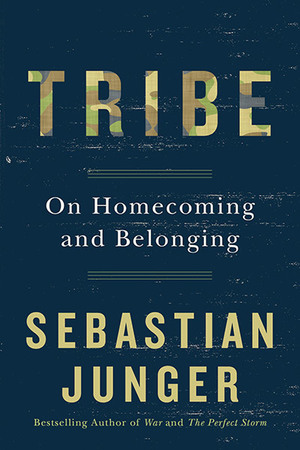
The war journalist and author Sebastian Junger wrote about these concepts and experiences in his excellent book ‘Tribe’. Junger explores the difficulties of the soldier returning from the battlefield. In doing so he also explores the role of ‘tribe’ in Indigenous Nations and their strengths, and contrasts these to the faults and problems inherent in modern, Western, disconnected and self-centred societies. I challenge any veteran (or parent of a teenager connected to friends through a device more than the physical) to read it and not recognise themselves and their mates in some way.
I knew – still know – my tribes. I knew with absolute certainty that 9 Platoon was better than 7 and 8 Platoon, but that combined we were Charlie Company who were better than Bravo and Delta. Of course the 5th Battalion was better than the 7th Battalion! Unless we were dealing with 2nd Cavalry or 1st Armoured Regiments in which case it was the Infantry soldiers against the rest. 1st Brigade was better than the 3rd Brigade – “Easy to deploy??? Easy to destroy!!!!” – and neither of us really bothered thinking too much about the 7th Brigade. But if anyone from the Navy or Air Force had a go at an Army colleague then then our tribe was those ‘in the Green.’ Civilians had crack at a military guy in the pub? We were back-to-back against them all.
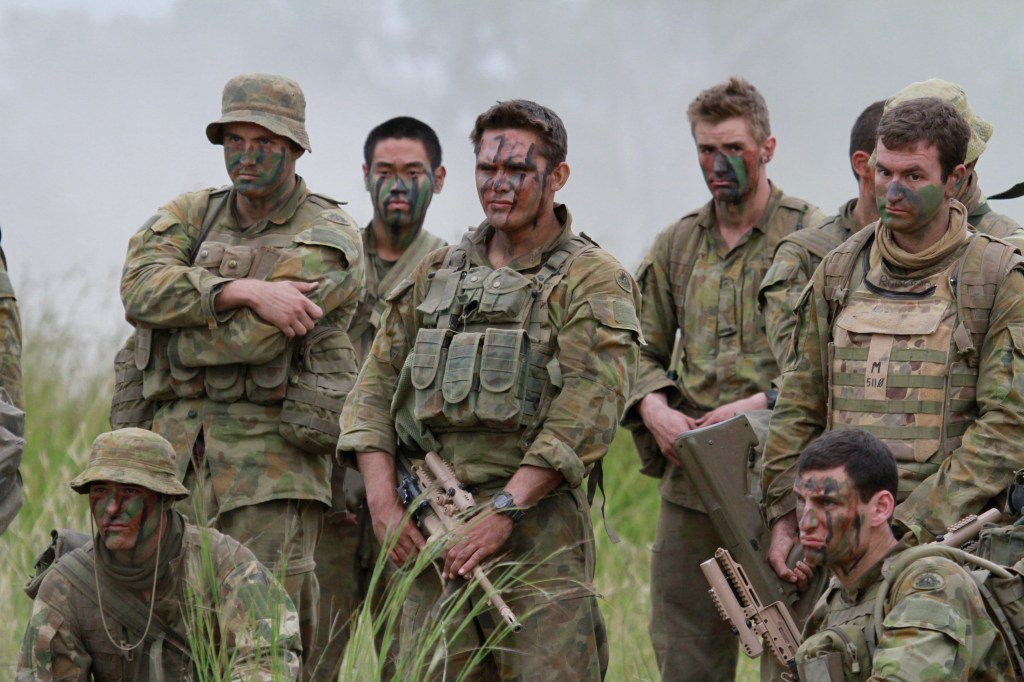
When people ask me if I miss the Army I always reply “No, I miss the Battalion. I miss my brothers and sisters-in-arms. I don’t miss being an Officer in Army Headquarters.” Not to disparage the work done in Army HQ – the people I worked with there were brilliant and we achieved some amazing things – but it wasn’t the same. With my Platoon, my Company, my Battalion I was with my tribe. We had a much more tangible and connected sense of being. Perhaps it was enhanced by the thrill of adventure and the threat of physical destruction should we fail. We were a team who lived and breathed the same values and objectives every day. Not to say we all liked each other of course, but we were more than a just a group of colleagues. We were brought together by a desire to serve and win, united by a badge, held together by our mascots and behaviours. We were a tribe with a purpose.
Section. Platoon. Company. Battalion. Brigade. Brother. Sister. Tribe.
The impact of combat service and leaving your tribe is another key theme of Junger’s book. From my own tribes, those who left the military shortly after returning from combat operations or those who left and cut off any connection to the tribe completely seem to be the most commonly affected by Post-Traumatic Stress, they seem to struggle more mightily in the private sector and to have longer term adjustment issues with their family. They are more disconnected, not just from their veteran mates, but their family and community. And as Junger (page 49; quoting Lyons) notes “when people are actively engaged in a cause their lives have more purpose. . .people will feel better psychologically if they have more involvement with their community.” I would propose that our veterans are healthier and happier when they stay connected with their military tribe or find a new tribe out there in civvie street – sporting clubs are awesome for this. There is not necessarily a panacea for every veteran but one solution I would recommend to all military veterans leaving their Service now or in the future is simply this:
Keep your tribe.
Keep your tribe because it is bigger than you know. Don’t just walk away and cut off all connections to the military, no matter how disgruntled you may feel, or however strong the sense for a complete change is. Seek out and join your Unit or Corps Association and benefit from the support, connection and community that can be found there – you can join now and be active later if you want. Joining now helps them to help you whenever you need it in the future. Find an Ex-Service Organisation that aligns with your values and provides actual support to veterans (Not travel budgets for management and their families or poker machines – you know who you are). Reach out and connect to other veterans and networks through LinkedIn, Twitter, even (gulp) Facebook. In all of those locations a veteran can find a community to be involved in, a purpose or cause to connect with, and eventually, to give the benefit of their own experiences and lead the way. Your tribe is not just those you served with, but those who came before you, and those who follow. Your rank does not matter.
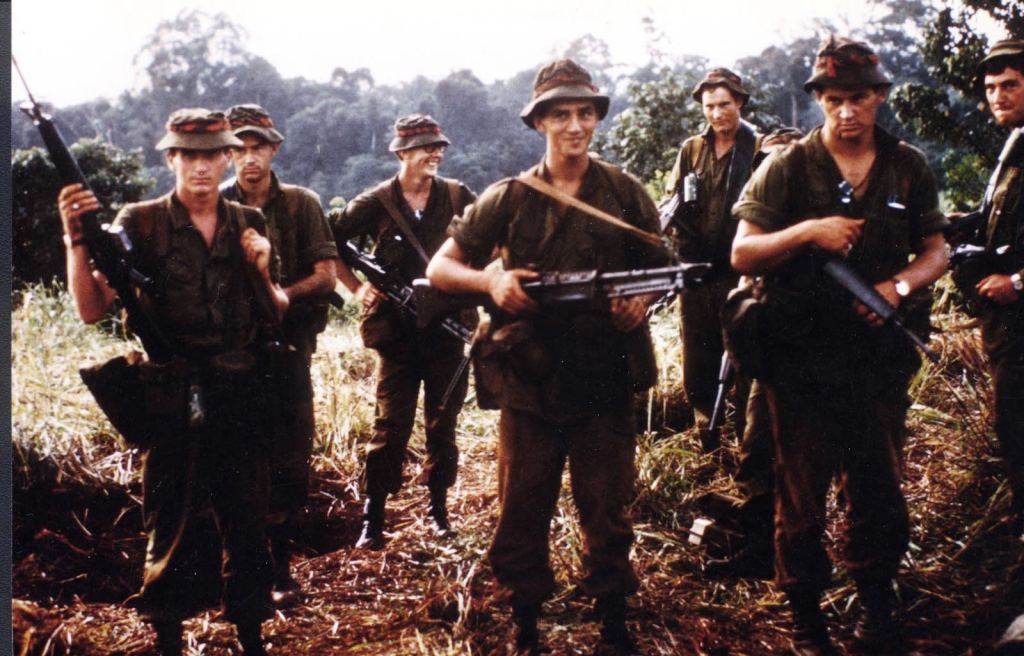
Keep your tribe because it will be the thing to bring you all together again. When the time comes, don’t shirk the reunions and the big occasions. Truth be told they can be hard times – I’m still not comfortable with marching on Anzac Day and I usually do not – but the benefits of those reunions and occasions are enormously positive. In attending a 50th reunion for Vietnam Veterans of the 5th Battalion Association I heard from many veterans who were only reconnecting at that event decades after their service stories of isolation, loss of purpose and damage. Then, conversely, how being at the reunion had lifted a weight off their shoulders as they lived again with their comrades-in-arms. The connections, the bonds of tribe in Section, Platoon, Company and Battalion were still there. The tribe provides more than a passing interaction on social media, but a real personal connection of worth.
Keep your tribe because only your tribe really understands. I’ve lost count of the number of times that a still serving member of the Defence Force – usually an Officer – makes some comment on how I must be “earning the big bucks now” as a consultant; or even more insultingly, but thankfully less frequently, that I’m now just a “money grubbing consultant.” Not surprisingly, not once – not even once – has this comment been made by anyone I have served with in combat units or on operations. Never someone from the tribe. The people with who I slogged with through the jungles of Australia and South East Asia, dodged the rockets with in Iraq, survived the brutal slog of Afghanistan with or even just the tedium of another advance up and down Shoalwater Bay would never say such a thing. Your tribe knows who you are and where you came from. And they might even prevent you from smacking someone upside the head who deserves it! (Just joking. Mostly).
Keep your tribe because it just may be people from there who will assist you to find a new job, career or purpose for you. The veteran tribe is willing to lean forward and assist those who ask for help. And it’s not just for those that people know personally. Just check out the response to this post on LinkedIn post where veterans from all services, industry sectors and parts of the country reached out to support two veterans looking for an opportunity. When I left the Army my first job came from a former Brigadier I knew. Another veteran, who I had not seen for almost 20 years, offered advice on living and working in Singapore and opened up his home for a visit so I could explore opportunities there. Many others were willing to sit down, have a coffee or a beer and provide advice. My veteran tribe has in some way or the other, provided me with opportunities to work with companies doing great work.
Somewhere between 5000 and 6000 Australian Defence Force members have left the military one way or another in the past 12 months. My hope for each of them is that they keep their tribe with them wherever it is they go, and whatever they do. Even if they choose not to they should know this: When they do decide to come ‘home’, we will welcome them with open arms.
Keep your tribe. Anyone who does will not regret it.
 Tales Of A No One Soldier.
From my own perspective a true article.
I’ve been in 2 army’s and still keep in contact with the association from the UK.
In Australia, it’s not the same with associations as to the level within the UK but just as important for updates or just similar minded people, who can relate to your patter. Alternatively, if you believe your intimate tribe (probably unit level) is not where you want to be at this moment in time use an alternative external platform ie insta or False Book to remain within the bigger like minded tribe. There are plenty of them out there and offer up a few alternatives.
I attended a vets breakfast last week and met a person who pulled the pin from the ADF 17yrs ago and never attended anything defence related in all that tim as he thought the cutting of ties was what he should do. After about 1hr chat he actually admitted to missing his “tribe” but thought he would loose face. After the breakfast he has informed me he reached out to his units association and reesetablished contact.
You don’t need to be in each other’s pockets all the time, nor keep in contact on a regular basis but vets and serving members will always assist where they can.
Good article, some will agree and some won’t but for me having the option is the key
LikeLike
Pingback: To March Or Not To March? That Is The Question. | Tales Of A No One Soldier.