Bearing witness to the end?
As we watch, from the safety and distance of home soil, the recent footage of Afghan National Army (ANA) soldiers meekly surrendering to the Taliban, and amid the withdrawal of Australian troops from Afghanistan, the social and mass media spheres are thick with questions, commentary and opinions. These discussions focus on a powerful question: Was the war worth it?

Former leaders of Defence, strategists, academics and politicians have all been eager to put forth their views. Did we achieve what we set out to? Did we have the right strategy . . . . or any strategy at all? (I especially baulk at this one coming from those who were meant to be setting the strategy!) Was it worth the loss of Australian lives, the physical and mental injuries that were suffered? The separation from family, friends and home?
How do you define the worth of a war? Success or failure against objectives? The number of casualties? Trends in violence? Who ‘owns’ the most territory? Who runs the country? Do you need a conflict impact assessment with multiple non-combat metrics to understand the human cost? Or is this all just academic naval gazing?
For what it’s worth, here is the opinion of a No One Soldier.
What makes war ‘worth it’?
When is war worth it? The answer can’t be never. Otherwise tyrants and despots would rule the globe. Many things are worth fighting for and, while an unpopular opinion, sometimes violence, properly and proportionately applied by bodies charged with its moral and ethical use in the form of war, can solve problems. It is never the only solution, and hopefully it is the last resort. But war can not be excluded simply because it’s existence is difficult to countenance.
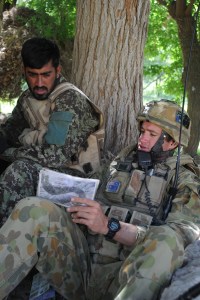
Is war only worth it if we don’t lose too many soldiers? Some pundits seem to think that the death of any soldier invalidates the worth of a commitment. In war, soldiers and civilians will die. To suggest that a war is not worth it because we suffered casualties or that innocents died is futile and dishonourable to those who went when their country needed them. No war is without the death of the good or the innocent. I wish it were different. If a war is only worth it if there are no casualties, then no country should ever commit to conflict. And then we are back to the tyrants and despots.
We should also remember why we committed our forces to the war in Afghanistan. A transnational terrorist group, Al-Qaeda, was operating with impunity under the protection of the Taliban, launching terrorist attacks that were directly planned or inspired from Afghanistan. Many Australians died or were affected by these attacks. Was preventing further attacks not worth it? By fighting the Taliban and Al-Qaeda in their own backyard, not ours, did we not save more lives? Is that not worth it?
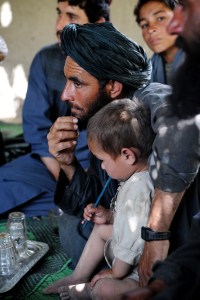
Many people seemed to be disheartened about the end result of the war in Afghanistan. That despite everything we accomplished, everything we tried to achieve, for all of the right reasons, it appears the Taliban will control the country again in the not-too-distant future. An unpleasant truth, perhaps, is that this war in the long term was not ours to win. It belonged to the elected Government of Afghanistan and the Afghan people. After the initial defeat of the Taliban and Al-Qaeda we were mainly charged with the development of the ANA and the security of the people in the surrounding provinces as they developed their capabilities. Our mission was to give the ANA the time and space to develop their skills, knowledge and capabilities to fight for their own country, to fight for a better future. If they chose not to fight, or they lost their war, then that is on them and not us – sad as it may be. The NATO and International Security Assistance Force were always going to leave, and the ANA were always going to have to fight. They had the choice and the chance to fight for their country. Unfortunately, they appear to be losing, but does that mean that giving them that choice, that chance, was not worth it?
The above seem to be the most popular ‘metrics’ in these discussions on the worth of the war in Afghanistan. Rarely do these metrics ever mention the suffering of the Afghan people. For of course Afghanistan is not just a deployment or a war. It is a country. One that is filled with many different tribes and peoples, a great many of whom may be about to begin another period of living under the brutal oppression of the Taliban. And the Taliban are not a good alternate government for Afghanistan.
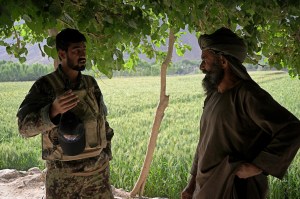
Maybe a Democratic system of government doesn’t work in a tribal, feudal, dispersed and hierarchical agrarian society like Afghanistan, but the outright brutality and fundamentalism of the Taliban will be orders of magnitude worse. They will continue to commit grievous human rights violations, prevent education, stop health support and slaughter those who they deem to be lesser or just from the wrong tribe or religion. Was stopping those crimes – if only for a decade or two – not worth it? I’d like to think that somewhere in Afghanistan, maybe out there in one of the valleys, is a young person who having benefitted from an education, from health services, might be the leader their people need to fight back against the Taliban. Maybe I’m too idealistic, but if that young person is out there, and they do lead their people in the future and defeat the Taliban once and for all, does that make it worth it?

Looking back but living forward.
So ten years on from my own deployment, was what we did all those years ago worth it? The time away from families, the training, the stress, fear, bravery, the bloodshed, the losses – Rich Atkinson, our American and Afghan brothers, the locals. I can see many of them still.
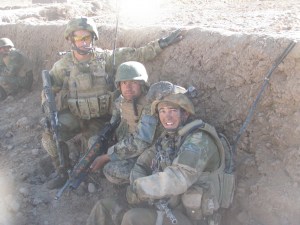
I know that for many years at least a couple of times a week I wonder if I could have done something better. Maybe I should have charged that hill in Derapet that day, maybe I should have fought harder to get up to TINSLEY, could I have done anything to stop the Taliban strapping an IED to a young girl near the end of our tour. But I find myself dwelling less and less on the maybes, and finding comfort in the certainties. I know that we did our best. I know that we weren’t perfect. I know that leading Combat Team – Charlie was the greatest honour of my military career. I know that jobs I have done since will have a longer lasting strategic effect.
Was it worth it? I believe, strongly, that each individual needs to answer this themselves. Don’t read the bullshit in the media and sure as hell don’t just listen to me. So I ask my fellow veterans this: Take some time today or tomorrow to reflect on that question. Was it worth it? Do it deeply, personally, and look beyond the simple issues. When you have your answer you can keep it to yourself or share it – it’s up to you. Whatever your opinion is you have earned the right to it.
But my take is this: I would go again. We went to give a people a shot at freedom. We went to have the back of our mates. The day that we stop standing up for those who cannot stand up for themselves, or we leave a mate in a fight because we might take some losses or the politicians might lose some votes, that is the day that Australia ends. We look after those less fortunate; we back our mates; we try and do the right thing even though we are not perfect.
It was worth it.
Note: The photos from this blog were mainly taken by Corporal Chris Dickson from the 1st Joint Public Affairs Unit and Corporal John Wollaston, United States Army.
 Tales Of A No One Soldier.
So, so true Dave. As I sit here reading this I wonder why on so many levels we were there and if we did any good. I roll back through my photos and memories and it is the population that I was there to really do something good for to make their lives better. Yes, we trained the ANA and in retrospect they too were there for the population.Seeing the smiles on the faces each day made it worth while.
LikeLike
A very thought provoking piece, about a complex issue, in a complex, foreign & to our mind backward country. Many of the gifts we take for granted, freedom of expression, access to education for all children and men & women & a reasonable health system accessible to all regardless of social standing or wealth, may be foreign to them but through your efforts you did show them there is another way. Hopefully as you say you have planted the seeds in the minds of the men, women & children that the way of the taliban is not the only way & if they want a better life, they will have to fight for it. That may take a long time to accomplish but perhaps, hopefully you have started the process
LikeLike
And I’d be right there beside you, minelab in hand.
LikeLike
Pingback: Keep Your Tribe. | Tales Of A No One Soldier.