Baghdad, 2006-2007. No place for a tourist but a great place for a soldier. I’d deployed before but not to anything like this. Working alongside Iraqi soldiers and a mixed team of Aussies, Brits and Americans, the pace, sights, sounds and occasional excitement was exhilarating. Professionally, I felt on top of the world. Then the wheels fell off.
Fatigue was a part of deployment life, inevitable from the 12 hour plus days so when I started to feel more tired than usual, I thought nothing of it. Unexpectedly, my mum went downhill, and I made a quick trip home. She died 30 minutes before the plane landed in Sydney. After her funeral I returned to Baghdad. I was not feeling great when one morning I surprised myself by drifting into a blast wall I was walking beside. Something was not right. I went to an American hospital in Baghdad a few days later and that evening I found myself on a CASEVAC helicopter up to Balad. There was a stretcher case on the aircraft and a couple of Americans who had been wounded that afternoon but were able to walk. The American crew were most professional, but I see them thinking ‘what was this Australian doing here with not a scratch on him?’
Later that night I was in on a massive USAF C5 aircraft headed to Germany. There were four intensive care teams on board managing four badly wounded Americans. The very professional crew set me up with a stretcher to sleep on, but again, I could seem them wondering what the hell was I doing there. I spent four days in the Landstuhl Regional Medical Center, a large American military hospital, doing a battery of tests that gave me an initial diagnosis and I started some treatment. A wonderful American neurologist called my wife. She was surprised and perplexed to be woken by the phone in the early hours of the morning with an American voice saying, “Good news, he does not have a brain tumor”. The trials of the military family.
I responded quickly to treatment, and feeling better, I returned ‘down range’ as the Americans called it and got on with the job. About six weeks later I relapsed and was back on a helicopter to Balad where a couple of fabulous American specialists were concerned I would go blind and wanted to send me to the Walter Reed Military Hospital in the United States. Instead, I came home to the hospital in Canberra. What made that three week stay tolerable was the support of family and so many Army mates that the nurses asked why I had that many visitors.
Some months later the Army found a job for me, but it was soon clear I would never be deployable again, so I decided to leave. As it turned out, I was medically discharged. I’ve always had a plan for most things, but this was not part of a plan. Then there was six months when I was unable to work and things were not great on most fronts. In time, I found a job. In an interview I was asked why I wanted to work in a particular organisation. I replied, “I’m about to be unemployed, I have four kids and a mortgage, and you are advertising.” The rather puzzled chair of the panel said, “We’ve never heard that one before – at least you are honest.” I got the job and once again, found rewarding work to do with some good people. It was not better or worse, it was just different to anything I’d done before. That first job was a great experience and 18 months later I landed the ‘dream job’ I would stay with until I retired.
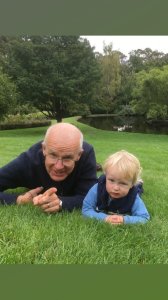
I’ve spoken to many people about the experience of leaving the Australian Defence Force. After talking about the distress of leaving something that you gave a good part of your life to and invested so much in, I usually say don’t rush out like I did. Get health and compensation issues resolved before you go if at all possible. Don’t try and do it all on your own. Seek the support of an advocate to help you through the paperwork. Work out how you are going to manage financially, keep some money in reserve, and have alternatives for when your preferred option does not come through. Not everything will work out 100% the first time round. But you have dealt with adversity before and you will get through this too. Your family will be challenged while they go through this experience with you, and you want to come through it with them.
And don’t worry too much about what you will eventually do. The things that make you a successful soldier, regardless of your rank, will see you successful in another career: self discipline, adaptability, mental toughness, personal organisation, a practical approach to problem solving, your sense of responsibility, your ability to work with others in a team, and your ability to lead.
For several years not a day passed when I did not think about the Army in some way – of mates, adventures, some hardships, some privileged experiences. And then one day I could not remember the last time I looked back to the past.
I’m in a sweet spot these days, supported by a great family, mates, with different adventures and some new interests. And having never volunteered for anything in uniform, helping with a couple of great voluntary organisations. But if I was 17 and able to start out again, I would do it all over again and love it just as much.
Chris Appleton served 33 years in the Australian Army, most of it during the ‘Long Peace”. The highlights of his career were to command an infantry battalion and to be involved in the training and education of the Army’s future leaders.
 Tales Of A No One Soldier.
Thank you for sharing your story Chris. You highlight a number of significant points with regard to separation from Defence. I most certainly enjoyed our time working together at RMC.
Regards,
Dave (WOPTI-Rt)
LikeLike
This is a great article Chris, which tackles a pretty tough experience in a typically ‘no fuss’ way. Thank you for sharing it, and thanks for what you did for so many of us when we were soldiers. You remain a source of inspiration and a reinforcement of strong values.
Regards,
Pete
LikeLike