Recently I had an interesting discussion over some beers with a couple of the team from our Afghanistan deployment about medals, or ‘gongs’ as we call them in the colloquial form. We talked about our brothers-in-arms who had been awarded Medals of Gallantry, those who had been awarded medals for leadership, those who received commendations and those who didn’t. After a couple of quiet ales the real reason they’d called me down to the local pub was revealed.
Their question was if they should make a submission to the recently announced Senate Inquiry into the efficacy of the Defence Honours and Awards system about a Distinguished Service Cross awarded to an officer from our tour for ‘distinguished command and leadership in action’. They felt – and I agree – that the individual was never ‘in action’ against the enemy and arguably not distinguished in leadership. The ‘in action’ comment is fact. The ‘distinguished’ part is my opinion – and my former colleagues it would seem – and is completely subjective. They felt that this particular award was more handed out for the position of the officer than it was earned, and unfortunately they may well have a point.
The Gong Gravy Train.
It has been a matter of discussion and conjecture for many years that some medals, in particular the Distinguished Service Cross (DSC) and Distinguished Service Medal (DSM), were awarded to individuals deployed in certain roles and positions regardless of their performance in that role or meeting the criteria for the award. Recent very public discussions on this subject include those around the previous Chief of Defence Force’s DSC being awarded for service ‘in action’ against the enemy despite being stationed in the safety of Dubai, bar the occasional visit to the troops on the front lines. The changing of criteria of the DSC from being for leadership ‘in action’ to ‘on warlike operations’ around 2011 hasn’t helped clarify anything in these discussions. While this issue has gained notoriety in recent times the reality is that arguments around who received what medal and who missed out have existed for decades, and probably as long as Armies have given out awards for bravery, service and leadership. There is still a group of veterans insisting that their rotations to Rifle Company Butterworth in the 1980’s consisted of warlike service in an effort to secure medallic recognition and associated benefits.
Simply put, if DSCs, DSMs or any other medals were handed out based on someone’s position during a deployment or posting rather than for their performance, it undermines the whole system. And there is now a growing perception that many of the DSCs awarded to officers or senior non-commissioned officers during the Middle East campaigns were simply the result of being deployed into a certain position rather than any actual act or period of exceptional leadership – ‘a gravy train’ in medal form. There are stories from some Task Groups and Task Forces of many Squadron or Company Commanders receiving a DSM, every Commanding Officer a DSC. And if everyone is ‘Distinguished’ simply by the nature of the position they held, doesn’t it just become a participation award? The question my former colleagues put to me was but one example of where there is hurt and confusion about to whom and for what that service medals were awarded.

Honour unearned?
And the question matters because these medals are valued and esteemed for what they represent. When soldiers and veterans meet with gongs displayed, their eyes will typically move to the other persons medal rack. The medals that display some form of gold and orange, or red and white, or blood red, with a cross or star below the ribbon are held in the highest of regard as they represent valour, gallantry, leadership and bravery. Then the eyes stray to the campaign medals which speak of operational deployments, then those for length of service. If you have one or more of the first group then all due respect used to be rightly given without needing to know the specifics of whatever action or period of service lead to the medal being awarded (Although you might ask). You knew without a doubt that the individual must have done something exceptional to be duly recognised. But there is doubt now, which is wholly unfair on the those who were awarded their medals legitimately.
There is no doubt in my own mind that there is a very clear systemic fault at play and it has been exploited by acts of commission or omission by those who should know better. Having stated that, it should also be noted that the majority of the medals and awards are rightly earned, and in fact there should probably be more of them sitting on the medal racks of our soldiers and veterans then there are currently – it’s unfortunate that some form of unofficial quota system seemed to stymie that.
We should absolutely scrutinise any award of a medal which has even the inkling of being ‘cut and pasted’ because someone was in a particular position. To this end, the Senate inquiry is a good thing. And while the Inquiry may choose to review the awarding of certain medals it could probably do more good in the long run by analysing where nominations were NOT awarded and reviewing those determinations to see if they should be corrected. And if or when they find evidence of an honour unearned? Well, hard discussions will need to be had and by the very letter patents of the award, the medal(s) returned.
“To wear a medal unearned is to dishonor not only those who truly sacrificed but also the very values that the medal represents.”
Colonel (Retired) David Hackworth, United States Army.
The Gollum of Gongs
But, here is the rub. Someone who has received an award that might be under question could say that they accepted only what was offered to them and they wear this for everyone who served with them – and in this they would be correct. The devil is in the detail of the nomination though: who nominated the individual for the award, for what action or service, and what made it so distinguished? Against what benchmark was this set? And why did (almost) everyone who held a particular position receive the same medal? Curiouser and curiouser! And now perhaps the most important question, what good comes of retrospectively trying to enforce the standard now? If the officer from the start of this story were to have to hand back his medal would it make my life any better? Those of my soldiers? What damage would it do to him and his family? Would the effort be worth it? It’s an incredibly complex and emotive issue.
I would hate to see my own soldiers and team members stress or lose sleep over this issue. I have seen ‘medal rage’ turn veterans into viscous, hating individuals, jealous of what they have never had or what they perceive to have been lost to them, or ‘wrongly’ given to others. They resemble in character Gollum from Lord of the Rings – always seeking ‘the precious’ and never satisfied. It becomes a cycle of jealousy and spite regardless of who ends up the owner of whatever gong is in question, and it breaks the bonds of service that we veterans so often truly need to support each other. And which is more important, the medal or the support?
My Combat Team, like most others, had members recognised for gallantry, bravery, distinguished leadership and service. As I said to our team as we returned home – and I totally plagiarised this from a British Army Commanding Officer – some officers and soldiers received due recognition for their actions and most did not. The honour and the burden of those who received that medallic recognition is to wear them for the rest of us, to tell the story of us all. I know that my team submitted more nominations for honours and awards for being ‘in action’ in the true meaning of the words – and not just being 60kms down the road or sitting in a base near Dubai – then ever received them. And probably more who were as brave or braver whose actions were not submitted for a medal because no one saw them. It doesn’t mean they didn’t happen. It doesn’t make the soldier any less gallant, or brave or a less of a leader.
Be gone, Gollum
Were medals for Distinguished Service handed out to those who had not properly earned them? Yes. Should there be an ‘End of War List’ for both the Middle East and South East Asia deployments of the past 20 years to capture those who were missed? Yes. Will I lose any sleep over either of those two outcomes? Not a wink. But for those who feel so moved to action I would suggest that rather than make a submission to the Inquiry about those gongs perceived to have been awarded without honour – to what will no doubt be yet another long winded Government Inquiry – that if they really, really, need to put something in writing, to do so seeking recognition of their peers whose gallantry or distinguished service was not honoured previously; it would be excellent if we could correct the record in the positive.
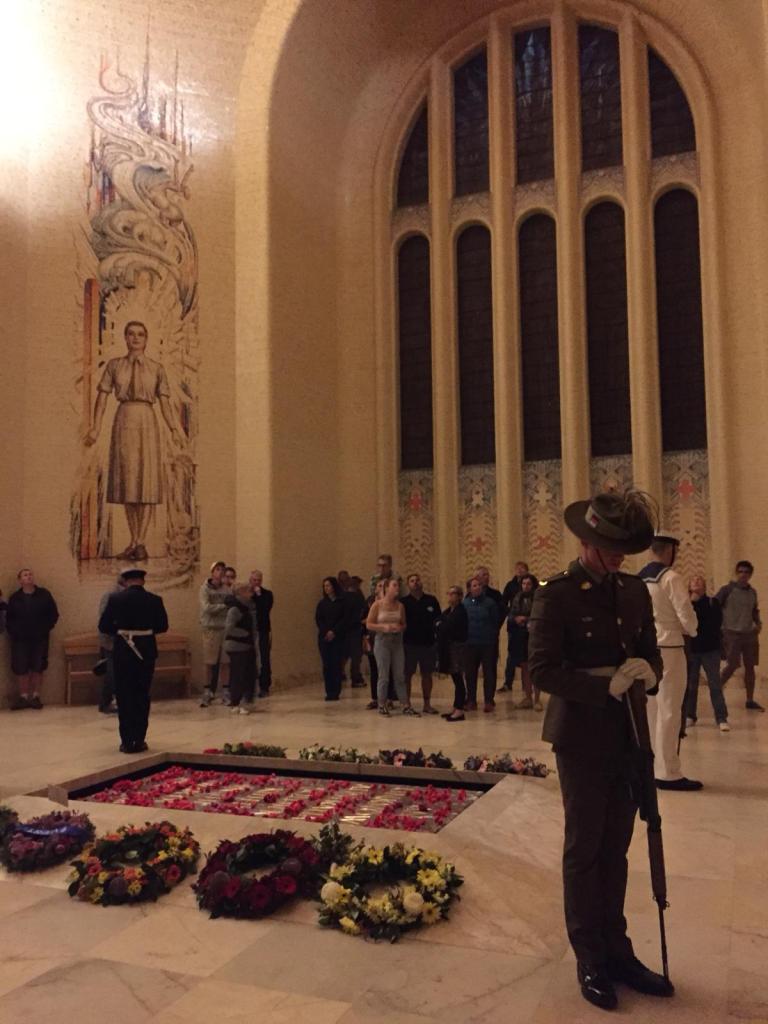
When I wear my medals on Anzac Day or any other day, I am never jealous of the gongs I don’t have, but grateful and honoured to have served with so many who wear the marks of courage, bravery and leadership from our time together. To carry jealously or anger over the absence of a piece of medal and ribbon can not lead to any good. To seek to hurt someone by having an award removed even if I know – or think I do – that the award is unearned won’t help anyone in the long run either. The best memories and marks of my service are in the continued relationships with those I had the honour to lead and serve with; of the Black Band I wear on my wrist to commemorate those who were Killed in Action; of the beers and cheers we will raise to us all the next time we get together to tell tall tales and true. No ‘precious’ can ever replace that.
 Tales Of A No One Soldier.