“Whether ’tis nobler in the mind to suffer the slings and arrows of outrageous fortune, Or to take arms against a sea of troubles, And, by opposing, end them?”
– William Shakespeare, Hamlet, Act 3, Scene 1.
If you had asked me ten years ago if I would have any doubts about marching on Anzac Day I would have said “No”. It wasn’t a worry at all. I had marched on multiple occasions with my fellow soldiers as part of Anzac Day commemorations in many different locations. I’d been honoured to carry colours, to serve in catafalque parties as a cadet, and proudly led my team from Afghanistan through the streets of Launceston in 2016 as part of a reunion event.
But now, I’m a bit more conflicted about it all. I’ve marched since 2016 on a couple of occasions. But it feels. . . .strange.
The passage of time changes things of course. I have been out of the Army for 7 years now, my work doesn’t require me to hold a DCAC or security clearance anymore. Many of my mates have posted or moved away from Canberra where I live. Not a single one of those is the main reason I feel uncomfortable about marching, but I couldn’t tell you what was. So I decided to do what any good consultant does, ask someone else their opinion and then give it to you as my answer.
“And so now every April, I sit on me porch
– Eric Bogle, And the Band Played Waltzing Matilda
And I watch the parades pass before me
And I see my old comrades, how proudly they march
Reviving old dreams of past glories
And the old men march slowly, old bones stiff and sore
They’re tired old heroes from a forgotten war
And the young people ask, “what are they marching for?”
And I ask myself the same question“
Who cares (a lot)?
I went out to my network to ask people how they felt about marching on Anzac Day. I asked veteran mates from ADFA Days, my brothers-and-sisters-in-arms from my time in different units. People with who I had shared the same mud, spilt the same blood and whose opinions and experiences I value. Maybe it was just me after all – wouldn’t be the first time. The results were saddening, provocative and even evocative of a time when perhaps sentiment towards Anzac Day was not strong. But why? Was there a common theme? Something that we need to address or even can address? If modern veterans don’t march in numbers in the coming years then does Anzac Day begin to lose significance? There were some interesting discussions to be had.
From Timor veteran Ben: “I was lucky enough not to see true combat and my sense of service diminishes each year.” A sentiment shared by many regardless of their deployment experiences, combat service or perceived lack thereof.
Iraq and Timor Veteran Damian has a slightly different perspective: “I feel odd marching. . . .knowing what the WW1 & WW2 vets went through I don’t think my operational service goes anywhere close to marching in [their] footsteps.”
Dan, a Clearance Diver, holds similar points of view: “I don’t march despite seeing active service because I consider my service (on a ship in the Gulf with only a little bit of shooting where I never truly feared for my life) to be nothing compared to most of my fellow divers who did EOD tours of Afghanistan. I don’t feel like it’s right to march with them, though I go to the function afterwards.”
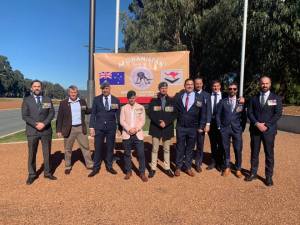
The prioritisation of combat or intensity of a deployment as the pinnacle of service is an interesting issue. Not everyone who serves is in a role that is meant to fight – and nor should they – but that doesn’t invalidate or diminish those roles. Some in ‘combat units’ never see combat; many who aren’t meant to be on the ‘front line’ do. I often say I was awarded my Infantry Combat Badge for my first deployment in Timor, but that I earned it for my deployments to Iraq and Afghanistan.
Should any modern veteran feel like their service is less worthy because they were not involved in combat? In a conventional war? After all, soldiers, sailors and aviators don’t choose the conflicts or who is involved. The situations of the day and the politicians dictate that. Every veteran who served on a deployment, regardless of scale, it’s nature, or the number of bullets, bombs or rockets that got thrown their way have two things in common that bond us: We volunteered for service. We went when our nation required us to go.
The humility and uncertainty in Ben, Damian and Dan’s observations – among others – is not helped by puerile elitism within the veteran community. Petty one upmanship about who served in ‘real wars’ that can drive modern veterans away from commemorative events or make them feel that their service is not worthy of recognition. I recall at a 5th Battalion Association reunion full of Vietnam Veterans being confronted by an old Warrant Officer who demanded to know how many enemies I had killed and why we only did six month tours. I – not politely – pointed out that we didn’t measure success in body counts, we had killed the people who we needed to, and avoided at all costs killing those who we didn’t; that all of my tours in multiple theatres had all been longer than 6 months and that almost every soldier in the Battalion had more operational experience than most Vietnam Veterans. I may have used a few other adjectives to describe his question and he retreated with a good degree of haste.
I am far from the only one to experience this. Jake, an Infantry soldier with tours in Iraq, Timor and Afghanistan: “I returned [from Iraq] a 20-year-old veteran who was from a small town. One [a town] that didn’t have a grasp yet on what a modern veteran was and looked like, and one that didn’t quite have the appreciation of modern war. I was a young proud veteran turned away from things of importance due to not being a typical veteran (in their words I was too young and should stop wearing grandpa’s medals as my own as it is very wrong)”
Tanya, an Engineer who deployed on an independent rotation has marched only once on Anzac Day in large part due to the same experiences as Jake: “Trepidation always flows on Anzac Day with the inevitable question ‘Are they your Grandfather’s medals’.
The hypocrisy and irony present in these statements from Vietnam Veterans in particular is breath-taking. Given their well documented poor treat by previous conflicts veterans and the community at large you think as a rule they would be embracing of modern veterans. I’m lucky enough that the 5th Battalion Association does so (bar the odd twit) and in fact has increasing membership and connection with modern veterans as an organisational objective! Not all are so fortunate.
Distaste with either the Government of the day or current Ex-Service Organisations was also a common theme. Navy veteran Katie notes that she: “. . . won’t march in Canberra. [It] feels too political and not really about the people who are marching.” Katie prefers marching away from the hype of the big cities in the regional areas: ‘. . . because I get to march with my uncles or my father-in-law who were nashos and Vietnam Vets. It’s more about getting the opportunity to march with them for the day . . . and sharing the common unspoken understanding of being vets’
From all of my conversations, emails and message exchanges on this issue the common themes emerging about why modern veterans are choosing to march – or not – come back to connection, engagement, and reflection on service. The first two seem to be about how people have remained close to their Services, and been received by those around them. The last occurs where veterans are concluding that the missions they were given were undermined by a lack of strategic direction, commitment and leadership from the Government and the defence forces regardless of which country’s armed forces someone served in.
Getting the band back together.
These conclusions worry me because connection and engagement are vital to veteran mental health (Everyone’s really). It’s something I have written about before here. Connection is key. Connection to your service, to your self and of yourself in service.
Connection to your comrades-in-arms appears to be the deciding factor, or missing factor, in the decision of the majority of modern veterans I spoke with to march or not when facing the slings and arrows of others. No one serves alone in the Defence Force, you serve alongside with others familiar with you – familial to you – and it’s absence can be devastating. At the least, veterans are drifting away from their veteran community and thus commemorative services and marches. At worst, it is fatal. We need veterans to know that their service is worthy of recognition and commemoration and encourage people to take part in those services.
So how to do that? Self-help. Buddy help.
That familiar phrase for when you are wounded in the fight. Help yourself and then help your mates. I started this article with an idea to explore why modern veterans are disconnected, and potentially increasingly so, from marching on Anzac Day. In hearing and reading the saddening, provocative and evocative thoughts of my fellow veterans, I am moving to proposing some ideas to move us back to the March.
We start with the idea that Anzac Day remains a day of national significance and importance for all Australians, that it should remain so, and that modern veterans have a role to play in that. I don’t think this is ground-breaking, revolutionary or that too many would disagree. Unlike in previous generations though, if we do not lead or participate in the March, then the gap will be filled for us by well-intended groups who have not served but march to remember family members or just as formed groups such as cadet units. (This is a major bone of contention for many modern veterans but is a subject for a separate article, due to this one getting too long).
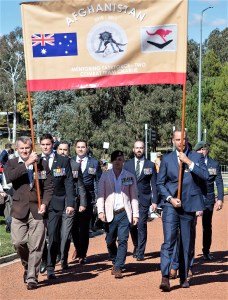
If connection is the main issue, then not participating won’t help me. Or anyone! So I have to take a deep breath, remember to be proud of what I did in service, recognise I did what was asked and needed at the time, and not compare myself to others who came before. Because there is no comparison. Wherever I was, whatever conflict, theatre, country, battle I deployed to or took part in – I was in the right place. Self-help.
I need to forgive what I perceive as my own failings in service. I need to worry less about what others may think of my time in uniform. If some muppet thinks they are better because they did 12 months in 1 tour and chooses that as a point of superiority, I need to remember that is more about their own insecurities and twisted ideas of comradeship and service, not mine. Self-help.
Modern veterans need to be the change in the veteran community that we want to see. Many are doing this – think of the establishment and success of multiple ex-service organisations to take over from the maligned, misaligned and mismanaged RSL as an example – but as far as the March goes, we won’t ever get stopped asking if we are wearing someone else’s medals if people don’t know about our service. For people to know about our service, they have to see it and realise it as real. We have to break that cycle. We have to support each other to march and encourage each other to do so. Buddy help.
For modern veterans to be comfortable to do that we need to realise that our service is worthy of recognition and commemoration. That regardless of the failings in thought of others – other veterans, strategic leadership or whoever – we did what was asked. Modern veterans need to engage with each other, for each other, remind each other (humbly) that we served our nation and did so with honour. Our Vietnam veterans can help us here as well having had the same struggles. And the launching point for many of them returning to the fold and coming to terms with their service? The 1987 Welcome Home parade. Buddy help.
So for my fellow modern veterans, let’s get around each other as we once served together and march. Let’s take positive action against our sea of troubles and by doing so, end them. If you’re in Canberra this year – any year – there is a place for you with me and your comrades-in-arms. We will break the cycle by leading the change in perception about whose medals we wear, that our service was worthy, by showing people who the day really commemorates.
For Ben and Damian and Dan: Our service is worthy of commemoration. Let’s march.
For Tanya and Jake: Those medals are yours, earned and deserved. Let’s march.
For Katie: This day is for modern veterans in the big cities and small. Stuff the politicians. Let’s march.
For everyone who wrote or called me about their experiences, their concerns and their thoughts: Let’s march. We didn’t serve alone. We don’t survive alone. We don’t – and won’t – march alone. Who’ll march with me?
“Waltzing Matilda, Waltzing Matilda
– Eric Bogle, And the Band Played Waltzing Matilda.
Who’ll come a-waltzing Matilda with me?
And their ghosts may be heard
As they march by that billabong
Who’ll come a-waltzing Matilda with me?
 Tales Of A No One Soldier.
The one thing we all have in common and ought to focus on is that we served. We prepared for and some deployed to tasks that others could not do. Whether our service was short or long, whether it left us with one gong or a dozen, the experience made us value loyalty, commitment, wry humour, and mateship in a way that most who have not served do not understand because they have not been to the arena. Service came at a cost to many of us personally and to our families. And despite it all, most of us remember the best bits of it with great affection. ANZAC Day is an opportunity to revisit some of these things.
In training we were all inspired by the stories of those who served before us. Before long the AWM’s new galleries will tell the story of this century’s veterans in a way that will leave the visitor in no doubt that they sustained the ANZAC tradition of service of which the nation is so proud.
There is great good will in the community for those who have served and the community does not know or care for the fact that some were gunfighters and some were sigs or loggies. Joe Public does not know what an ECN is the reasons why a corporal is the most important leader in an army. The simply admire those who stood up to do things that others would or could not so.
We need to ask ourselves this question about whether to march or not to march: If not us, then who?
And for those who decide not to march, I hope they will find their way to a ridge to watch the sun come up, and remember the peerless company of men and women with who you would share everything: possessions, comforts, affection, trust, confidence, interest, a brew, your last smoke, even life itself.
LikeLike
Thanks Chris!
Appreciate your wisdom as always.
LikeLike
This comment is about my parents’ generation. They both served in North Africa in WWII. They didn’t march, feeling that the ANZAC arrangements tended to glorify not mourn the conduct of war. They were proud of their service and maintained their service friendships, but they weren’t proud of ANZAC day and what it does. So don’t assume that greater participation is necessarily better. It isn’t something for everyone.
LikeLike
Thanks for taking the time to comment George. All the best.
LikeLike
Im a Vietnam veterans son
My father marched for years. I asked him once why? He said it was obligation to the fallen. Then I asked him, what has the ARMY or RSL done for the fallen?
The Vietnam war destroyed my father, which ultimately as we also copped it aswell. I’ve never liked the march or how it’s promoted. Many veterans suffered during an after the war, so why glorify it?
To hear many who never saw action yet they march, is a joke. The false consciousness is, society is made to think marching is great, as it’s a time to be proud and show off your badges for killing people when most wars shouldn’t of even happened, but did out of greed an lies. But come join up, you’ll march like this one day. Not taking anything away from veterans, but what about their kids who suffered because their parents served? What about the wives who also suffered?
Nothing patriotic going to another country an fight. Australia has been lucky as it never really seen war at its footsteps, yet world wide Aussies are considered great because there always there to support other nations.
Where is this attitude to the famillies it destroyed? Wheres the loyalty now?
Im proud of my father, either way. He doesn’t need to march to prove the war messed him up, mums an kids have the scars to remind us. And no, it’s not lest we forget. Everyone should remember the victims always, not just because of March. My final remark, RSL should be ashamed of themselves exploiting veterans for their greed. Many veterans who have gambling an drinking problems are taken advantage by the RSL. Keep drinking mate, have one on us, keeping pouring you’re hard earned money into the club. Rant over.
LikeLike
Hi Ken,
Mate thanks for sharing what is a painful and personal perspective. I appreciate your comment.
Take care.
LikeLike
Pingback: Australia’s Korean War 70 years on – debtstop
Pingback: Australia’s Korean War 70 years on | The Spectator Australia