I deployed to Afghanistan in 2010 and 2011 as part of Combat Team – Charlie. During the winter of January 2011, I took part in a mission as a Crew Commander of a Bushmaster Protected Mobility Vehicle which was part of a convoy deploying to the south of Uruzgan Province towards the infamous Helmand Province.
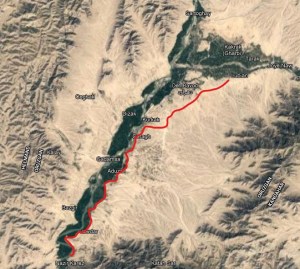
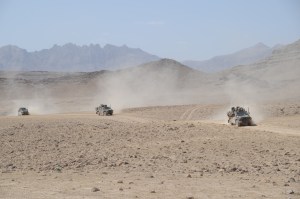
Our objective was to make contact with key leaders in the area and expand our Area of Operations alongside the Afghan National Army. The Convoy consisted of Bushmasters – or Bushies – carrying Combat Engineers, Explosive Ordinance Disposal experts, Infantry and, of course, our ever trusty ASLAVS. Accompanying us were the Afghan National Army soldiers we worked with to show the local population our solidarity and willingness to work side by side and win over hearts and minds. The route was largely unchartered territory for our team so we didn’t know what to expect.
After 5 to 6 hours crossing rugged terrain with the Combat Engineers clearing the way we reached the extremity of our vehicles capabilities. We identified an abandoned school which would become our base of operations. The school, if that is what you could call it, was positioned on a high piece of ground with excellent fields of observation to the front, with the mighty Helmand River snaking around us in the low and dead ground – that being areas we couldn’t see.
About 1km as the crow flies to the South East of our temporary base of operations was a small and impoverished village named Nazir Karez. It was accessible by Bushmaster but not considered a real threat. To introduce ourselves to the villagers we took three Bushies including EOD, to make contact. There were about 70 to 80 people in the village from what we knew. In Afghanistan, on the outskirts of nearly village I ever came across were small to medium rocky outcrops with rocks and stones stacked neatly in piles. These were the local cemeteries. What was most alarming to me was the majority of these graves were quite small, meaning a child or adolescent lay dead under a carefully placed pile of rocks. Nazir Karez was no different with it’s cemetery on a couple of hills just outside the village.
Now, as earlier mentioned, this was January 2011, winter in Afghanistan. And in this particular Area of Operations temperatures at night would drop to -10 degrees Celsius. Add in the wind chill factor and the grave yard shift for piquet was almost unbearable. During the day the max temp would be lucky to crack 5 degrees Celsius. But even then the piercing wind would cut straight through our Army issued puffer jackets, gloves and beanies.
Once we arrived in Nazir Karez the children came running up to us asking for pens, bottles of water, chocolate and biscuits. We obliged, like I said, hearts and minds. Every single one of these kids had multiple layers of clothing on and didn’t seem fussed by the conditions. The majority were wearing ear muffs and shoes, some even had gloves. However, as the mad rush eased off, a small boy no older then 6 years old walked up to where myself and the other diggers were huddled and complaining about the cold.
This child had no footwear, he wore one layer of clothing with his arms, chest, legs and head exposed to the elements. He asked for nothing, he just stood there staring like he was almost some kind of apparition. The Explosive Ordinance Disposal Sergeant offered him some water which he took but then the other kids quickly stole from him. He didn’t even put up a fight.
I’ll never forget that little boys face, he showed no aversion to the elements even though it was freezing. He didn’t fight for the water bottle that was stolen from him. And it was at that moment I realised that all of us diggers standing around with the best cold weather gear that the Army could issue us, we still bitched and moaned while the little boy looked straight into my eyes with no perspective of how good Australians have it.
All he knew was poverty and struggle as the norm. And after that day I never saw him again. And I’ve never stopped thinking, that he more then likely joined the rocky piles on the hills surrounding Nazir Karez.
 Tales Of A No One Soldier.